
What Curtains Actually Do Acoustically
A common misconception is that heavy curtains provide meaningful noise blocking — preventing sound from entering the room through windows. In practice, curtains primarily function as absorbers, reducing reflected sound energy within the room. Their noise-blocking effect on sound entering through glass is limited, typically 4–8 dB for a single layer of dense fabric hung close to the window surface.
This matters most in two scenarios:
- The window faces a noisy corridor, road, or adjacent unit with an opening, and some reduction in high-frequency sound (voices, traffic) entering the room is valuable.
- The room has hard surfaces (tile floor, painted concrete walls) that cause significant echo and reflection — curtains reduce this reverberation and make the room acoustically cleaner.
For renters living near LTA-managed roads or MRT lines, curtains alone will not eliminate exterior noise. Double or triple glazing, or acoustic secondary glazing inserts, would be required for significant exterior noise reduction — those options are covered separately.
Singapore Climate Note
Heavy thermal curtains sold in temperate markets often include insulating batting that can make rooms uncomfortably warm in Singapore's tropical climate. Look for acoustic-rated curtains with tightly woven fabric but without foam or polyester batting layers — these provide noise absorption without adding heat.
What to Look For in Acoustic Curtains
Fabric Density and Weight
The acoustic performance of a curtain is primarily a function of mass per unit area. A curtain weighing 350–500 g/m² performs measurably better than a 150 g/m² sheer. Velvet, chenille, and tightly woven polyester are the most common acoustic curtain fabrics found in Singapore retail stores.
Look for curtains labelled as "blackout" — these typically have a back coating that adds density, even if the primary function listed is light blocking. Many residents find that blackout curtains serve both purposes effectively, which justifies the slightly higher price compared to decorative fabrics.
Coverage Area
Sound enters around curtains as readily as through them. For noise reduction to be meaningful, the curtain should:
- Extend 150–200mm beyond the window frame on each side
- Reach from ceiling to floor (or as close as possible), not just the window opening
- Have enough width to overlap the wall surface rather than sitting in the window reveal
A curtain covering 0.8m × 1.6m window opening but mounted to cover a 2.4m × 2.4m wall section will absorb significantly more sound than the same fabric mounted within the window reveal.
Double Layering
Hanging two curtain layers — a sheer inner layer and a heavy outer layer — creates an air gap between layers, which adds modest additional noise attenuation (2–4 dB) compared to a single heavy curtain. The technique is also practical: the sheer layer provides daytime privacy while allowing airflow, and the heavy outer layer is drawn in the evening or when noise is most intrusive.
| Curtain Type | Typical Weight | Noise Absorption | Approx. Cost (SGD, per panel) |
|---|---|---|---|
| Sheer polyester | 80–120 g/m² | Minimal | $20–$50 |
| Linen-blend medium weight | 180–250 g/m² | Low | $60–$120 |
| Velvet or chenille | 350–500 g/m² | Moderate | $100–$250 |
| Blackout-coated polyester | 300–450 g/m² | Moderate | $80–$200 |
Area Rugs and Impact Noise
Impact noise — footsteps, dropped objects, furniture dragging — travels through floor structure and radiates from ceilings and walls in the unit below. It is often the most disruptive noise source in multi-storey Singapore apartments, and it is the category where soft floor coverings make the most meaningful difference.
A large area rug with a dense underlayer reduces the initial impact energy before it enters the concrete slab. The ISO 717-2 standard for impact sound insulation measures this as delta Lw (weighted impact sound improvement). A 12mm combined rug and pad can achieve delta Lw of 20–30 dB — a substantial reduction that residents in lower floors will notice.
The Role of the Underlay
The rug itself provides surface absorption and some impact damping. The underlay beneath the rug does significantly more acoustic work. A dense rubber or felt underlay of 6–10mm thickness converts impact energy to heat through internal friction. Choosing a rug without an underlay captures perhaps 30–40% of the potential impact noise reduction; adding a quality underlay captures the rest.
Rubber underlays are preferred in Singapore due to humidity resistance. Felt underlays absorb moisture and may develop mildew in air-conditioned rooms where condensation occurs on cold floors.
Coverage Area
A 160cm × 230cm rug covers the primary walking and seating area of a typical HDB bedroom. For a living room with a tiled floor, a 200cm × 300cm or larger rug — covering the area beneath sofa, coffee table, and main foot traffic paths — makes a more substantial contribution than a decorative 80cm × 120cm accent rug.
In conversations with residents of older HDB blocks in Tampines and Bedok, the most frequently cited improvement after adding a large rug was a reduction in complaints from downstairs neighbours about footstep noise — particularly from households with young children.
Dense Pile Rugs vs. Flat Weave
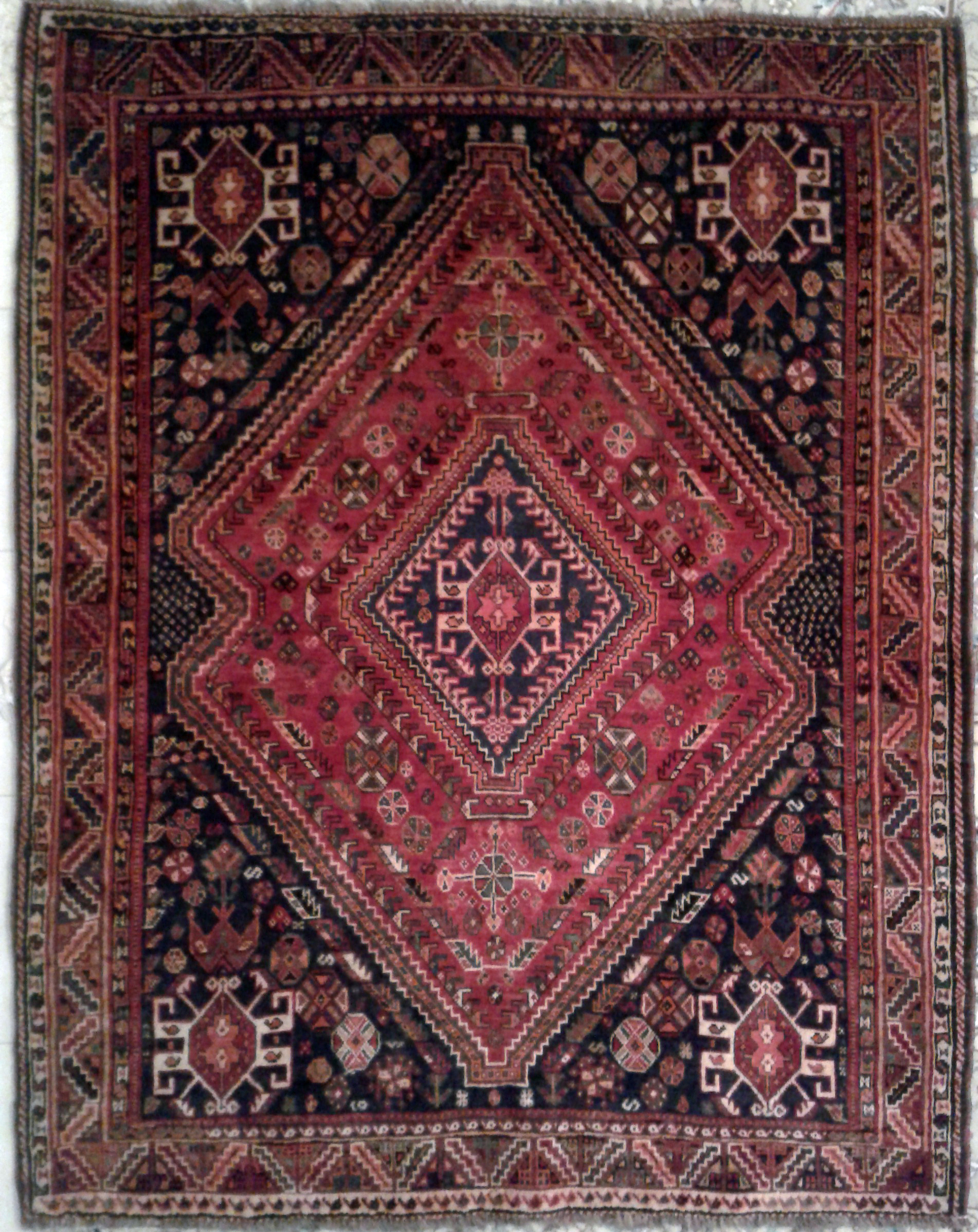
Not all rugs absorb sound equally. A dense-pile wool or synthetic pile rug (10–20mm pile height) traps air within the fibres and absorbs more mid-frequency energy than a flat-weave kilim of the same size. Traditional pile-style rugs — including machine-made versions of Persian and Turkish designs sold at Ikea and Courts — perform well acoustically while fitting domestic décor.
Where to Buy in Singapore
For curtains: IKEA (Alexandra and Tampines), Homedec at City Square Mall, and fabric curtain suppliers in Ang Mo Kio Hub and Jurong Point offer a range of heavy and blackout-rated options. Custom curtains with ceiling-to-floor length can be ordered at Spotlight or through HDB-registered interior suppliers.
For rugs and underlays: IKEA offers underlay rolls (STOPP range) that can be cut to size. Specialist rug shops in Chinatown and Orchard area carry a wider range of pile densities. Rubber underlay sold as gym flooring or non-slip matting at hardware stores functions equivalently to premium rug underlay at lower cost.
Combined Effect of Curtains and Rugs
Deploying both floor-to-ceiling curtains and a large area rug with underlay in the same room addresses two different noise pathways simultaneously. The combined approach typically yields:
- 4–8 dB reduction in airborne noise entering through windows
- 10–15 dB improvement in impact noise isolation measured at the floor below
- Reduced reverberation within the room (cleaner, less echo-prone acoustics)
Neither measure alone transforms a noisy apartment, but both contribute meaningfully to a quieter environment. Paired with sealed doors and acoustic panels, the cumulative effect reaches the threshold where most residents notice a significant difference in day-to-day noise levels.